
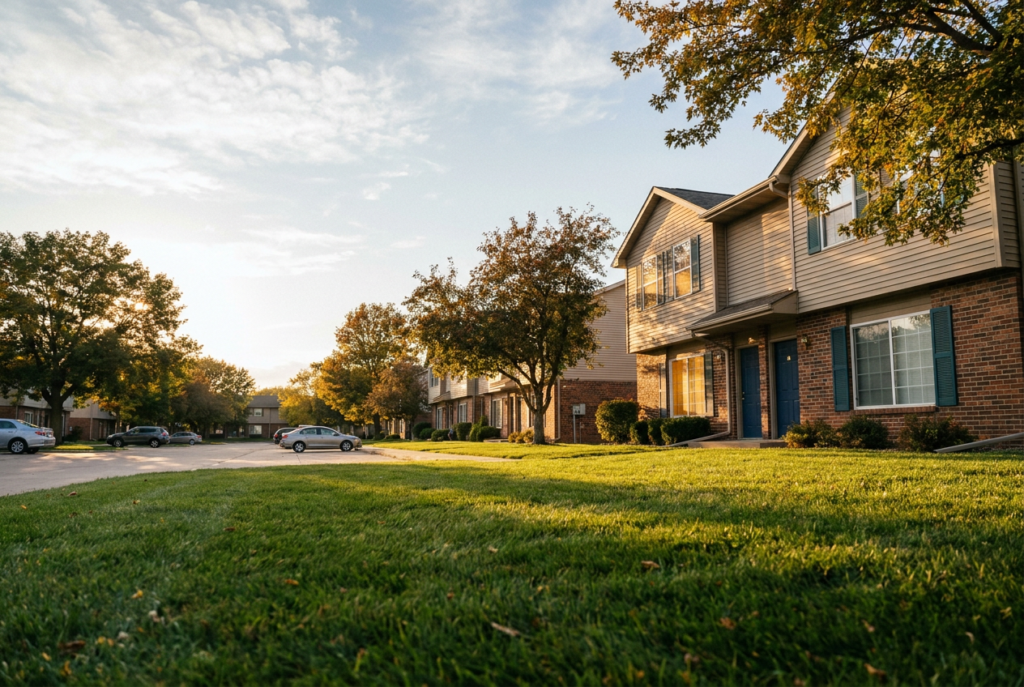
Why Passive Investors Are Looking at Sioux Falls Multifamily Syndication
Sioux Falls posted the lowest metro unemployment rate in the United States. The Bureau of Labor Statistics measured it at 1.8% in May 2026, tied with Bismarck, across 113 metro areas with labor forces above 250,000. Full employment keeps apartments leased.
The housing market tells a similar story. South Dakota home prices fell 1.4% peak to trough during the 2008 to 2011 crash, per the FHFA House Price Index for South Dakota. National prices dropped roughly 21% over the same window. That gap is why Sioux Falls multifamily syndication keeps showing up on the shortlists of limited partners who are tired of paying primary market prices for cap rates that sit below the cost of debt.
Where Primary Market Underwriting Breaks Down
Capital crowded into coastal metros and Sunbelt hubs like Austin, Phoenix and Atlanta for a decade. Institutional buyers with cheap debt bid acquisition prices up and cap rates down. When a cap rate sits below the cost of borrowing, a new acquisition produces negative use on day one.
Sponsors then lean on aggressive rent growth to make the underwriting work. They assume rents climb far enough to cover debt service. When thousands of new units open in the same submarket, rent growth stalls and operators start handing out concessions.
Limited partners absorb that miss. Distributions get cut, business plans stretch, and equity sits flat in a market everyone called a sure thing. The fix is not better forecasting. It is buying where the math works at today’s rents.
The Secondary Market Case for Sioux Falls
Secondary markets move to a different rhythm. Values rarely spike, and they rarely collapse. That trade suits sponsors who underwrite to cash flow instead of appreciation.
A lower entry basis does most of the work. A lower cost per door means less debt on the property. Less debt leaves more net operating income available to distribute, and it gives the asset room to absorb a soft quarter without straining a loan covenant.
Competition matters too. The largest institutional funds concentrate where they can deploy hundreds of millions at once, and Sioux Falls deals rarely reach that size. Sponsors negotiate on in-place income instead of winning a crowded auction on projected rents.
Supply is not zero, and honest underwriting says so. The South Dakota Multi-Housing Association biannual survey put the Sioux Falls vacancy rate at 5.91% in July 2026, down from 6.62% in January. Occupancy near 94% reflects steady demand, but multifamily permitting is running ahead of last year and new Class A product competes for the same renters.
Economic Drivers Anchoring Sioux Falls Multifamily Investing
South Dakota levies no state individual income tax. That draws employers and remote earners who want to keep more of what they make. It also gives the region a permanent recruiting advantage over higher-tax states nearby.
Financial services anchor the employment base. National card issuers and banks run large operations in the metro, a legacy of South Dakota’s lending statutes. Those jobs pay steady middle-income wages, which is exactly the renter profile workforce housing serves.
Healthcare is the second anchor. Sanford Health and Avera Health together employ close to 20,000 people in the area, according to the Sioux Falls Development Foundation. Nurses, technicians and administrative staff need housing near their shifts, and hospital payrolls hold up through national downturns.
What Well Capital Owns in Sioux Falls
Well Capital operates four communities in Sioux Falls today. The table below lists them straight from our portfolio. It shows the scale of a typical regional asset, not a current or future offering.
| Community | Market | Units | Asset Type |
|---|---|---|---|
| Williamsburg Townhomes | Sioux Falls, SD | 110 | Townhome community, larger floor plans |
| Brennan Hill Townhomes | Sioux Falls, SD | 62 | Townhome community |
| Colonial Courts | Sioux Falls, SD | 28 | Apartment community |
| Summit At Midtown | Sioux Falls, SD | 19 | Apartment community |
| Sioux Falls total | 4 communities | 219 | B/C-class workforce housing |
Those four properties total 219 units and sit inside a portfolio of more than 1,190 units across 12 communities in Texas and the Midwest. Clustering assets in one metro lets a single maintenance and leasing team cover all of them. That is the “Manage Right” half of our strategy: we operate the buildings ourselves rather than hand them to a third-party manager.
Value-add work here is unglamorous and measurable. Renovate interiors, repair common areas, tighten collections, and net operating income moves. Forced appreciation of that kind does not depend on the market doing anything.
Challenges to Weigh Before You Commit Capital
No market is all upside. Anyone weighing Sioux Falls multifamily syndication should price these challenges first.
- Slower rent growth. South Dakota does not produce the double-digit rent years boom metros occasionally post. Returns come from cash flow and renovation, not a rising tide.
- Smaller deal sizes. A single 300-unit complex is rare here. Sponsors aggregate several smaller properties to reach operating scale, which adds closing costs and management complexity.
- A thinner buyer pool at exit. Sellers face regional buyers and private syndicators, not a wall of institutional bids. Marketing periods run longer.
- Winter operating costs. Snow removal, roof loads and heating systems carry real line items. Reserves and experienced local property management are not optional.
- New supply is arriving. Multifamily permitting in the metro picked up through 2026. Underwriting has to assume concessions during lease-up, not a captive renter pool.
- No liquidity during the hold. A Regulation D private placement has no public market and no redemption window. Capital stays committed until the sponsor sells or refinances, and there is no dependable way to exit early.
- Multi-state tax filing. South Dakota levies no state individual income tax, so an asset there creates no nonresident return in that state. A sponsor whose portfolio spans states that do tax income can generate additional filings on top of your home state return. Ask your CPA what your own mix of assets requires.
- Fee and promote alignment. Acquisition and asset management fees get paid whether or not the business plan works. Read the offering documents for how much of the sponsor’s compensation is fixed and how much is tied to results.
Why B/C-Class Workforce Housing Fits This Market
Most renters in the region are nurses, bank staff, retail managers and logistics workers. They earn steady paychecks and are priced out of brand-new luxury product. That is the demographic B and C class apartments serve.
New construction skews Class A almost everywhere, because that rent level is the only one supporting current build costs. Older vintage buildings therefore compete mostly with each other. Well-run B/C assets hold occupancy while the new lease-up down the street discounts to fill.
This is the “Buy Right” pillar in practice: off-market B/C-class communities in neighborhoods people already want to live in, bought on current fundamentals. Read more about how we approach multifamily investing and the three pillars behind it on our about page.
What Comes Next for South Dakota Multifamily
Domestic migration keeps favoring low-cost, low-tax states. As affordability worsens on the coasts, secondary metros capture a larger share of relocations. No state income tax keeps pulling high-earning remote professionals into the region.
Operating discipline decides the next cycle. Utility costs rise faster than rents across much of the Midwest. Upgrading HVAC, installing low-flow fixtures and metering water back to residents cuts expense load and lifts value at any cap rate.
Alignment matters as much as efficiency. Our sponsors fund at least 5% of the equity in every deal, so our capital sits beside investor capital. We also direct 10% of sponsor profits to charity:water, which is the impact investing side of the business.
How to Choose the Market That Fits Your Passive Multifamily Investment Strategy
Picking a private placement means judging the sponsor and the real estate separately. Sioux Falls suits investors who want current income and a conservative basis more than a large appreciation multiple. It suits investors with a low tolerance for supply shocks.
Run these checks before you commit capital anywhere:
- Cold-weather track record. Ask what the sponsor budgeted for snow removal and roof maintenance last winter, and what it actually spent.
- Sponsor co-investment. Ask how much equity the general partner funds personally. Well Capital commits at least 5% of the capital in every deal.
- Debt structure. Long-term, fixed-rate, non-recourse debt removes the rate-reset risk that broke so many 2021 vintage deals.
- Underwriting assumptions. Compare projected rent bumps against leases actually signed at the property in the last 90 days.
- Who operates the asset. Vertically integrated sponsors control renovation pace and expense discipline directly.
Then read the private placement memorandum in full. It defines the distribution structure, the reporting cadence and the risks in language the marketing never uses.
To see how we source off-market Texas and Midwest communities and operate them in house, start with our investor resources, then complete the investor questionnaire so we understand what you are trying to accomplish.
This article is general education. It is not an offer to sell or a solicitation of an offer to buy any security. Any offering is made only through official documents to qualified investors. Consult your own CPA, attorney and financial adviser before making an investment decision.
Related reading
Frequently Asked Questions (FAQs)
Why are passive investors shifting to Midwest multifamily syndications?
Basis. Midwest apartment investing carries a lower cost per door than coastal and Sunbelt metros, so a sponsor can underwrite to in-place income instead of forecast rent growth. Institutional competition is lighter, and employment anchors in healthcare and financial services hold up through national downturns.
Do out-of-state passive investors pay income tax on South Dakota multifamily syndications?
South Dakota levies no state individual income tax, so a South Dakota property does not create a nonresident state return there. Investors still report their share of income federally and in their home state. A sponsor holding assets in states that do tax income can add filings. This is general information, so confirm your own position with your CPA.
Are syndications in South Dakota structured differently from other states?
The legal structure is the same. Sponsors use a Regulation D private placement to offer limited partnership interests. Investors receive a Schedule K-1 each year and take their share of depreciation, subject to their own tax situation. Confirm the details with your CPA.
How should a Midwest multifamily acquisition be financed?
Conservatively. Long-term, fixed-rate, non-recourse debt protects cash flow from interest rate moves and limits personal exposure. Floating-rate bridge debt with a near-term maturity is what pushed many 2021 and 2022 deals into capital calls.
Who is eligible to invest in a multifamily syndication?
It depends on the exemption the sponsor uses. Under SEC Rule 506(b), an issuer accepts an unlimited number of accredited investors and up to 35 non-accredited but sophisticated investors. Rule 506(c) offerings are limited to verified accredited investors. Review the specific offering documents for eligibility requirements.